


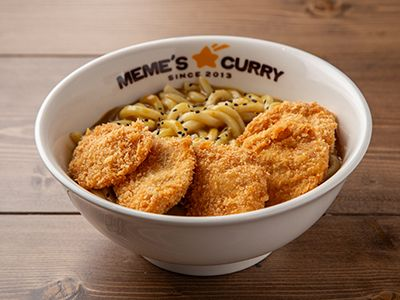
In 2013, Kuwait’s dining scene was already vibrant, diverse, and competitive. From Middle Eastern classics to international franchises, the market was saturated with familiar favorites. Yet one dish was almost entirely absent from the conversation: Japanese curry. That gap became the foundation for what would grow into Meme’s Curry — now one of Kuwait’s most recognized Japanese restaurant brands.
Meme’s Curry started with a simple but focused vision: introduce authentic Japanese curry to a market unfamiliar with its flavor profile. Unlike Indian or Thai curries, Japanese curry is milder, thicker, and slightly sweet, with a comforting, stew-like consistency. It’s a staple in Japan but was largely unknown in Kuwait at the time.
Launching a concept centered on a niche dish carried risk. Consumer behavior in the region often favors recognizable cuisines. However, the founders identified an opportunity — Kuwait’s growing appetite for global flavors. Rather than compete directly with established Asian restaurants offering sushi or ramen, Meme’s Curry carved its own lane.
The early strategy was clear: keep the menu focused, maintain quality, and build curiosity. By highlighting the uniqueness of Japanese curry and pairing it with approachable options like rice bowls and fried cutlets, the brand reduced the barrier to trial. The dish was positioned as both comforting and different — familiar enough to try, distinct enough to remember.
Word of mouth played a crucial role in its expansion. As diners discovered the rich, savory taste and consistent quality, social media amplified the buzz. Kuwait’s food culture thrives online, with influencers and everyday customers sharing new finds rapidly. Meme’s Curry benefited from this ecosystem, gaining traction organically.
Consistency became the brand’s strongest asset. In a competitive restaurant market, sustainability depends on operational discipline. Maintaining flavor standards, portion control, and service quality helped build trust. Customers knew what to expect, and that reliability translated into loyalty.
Over time, Meme’s Curry expanded beyond a single location. Growth was measured rather than aggressive, allowing the brand to preserve identity while scaling operations. This controlled expansion reinforced its reputation rather than diluting it — a challenge many restaurant chains face.
The success of Meme’s Curry reflects broader shifts in Kuwait’s culinary landscape. Consumers are increasingly open to specialized concepts rather than broad menus. Niche authenticity has become more appealing than generic variety. By focusing on one core offering and executing it well, the brand differentiated itself in a crowded market.
Today, Meme’s Curry stands as an example of how a focused idea, when paired with quality and patience, can reshape a dining category. It didn’t rely on trend-driven marketing or overcomplicated menus. Instead, it introduced something new, refined it, and allowed the market to grow with it.
From a single concept in 2013 to a recognized Japanese restaurant chain, Meme’s Curry proves that sometimes success isn’t about reinventing everything — it’s about introducing one great idea at the right time and executing it consistently.
