


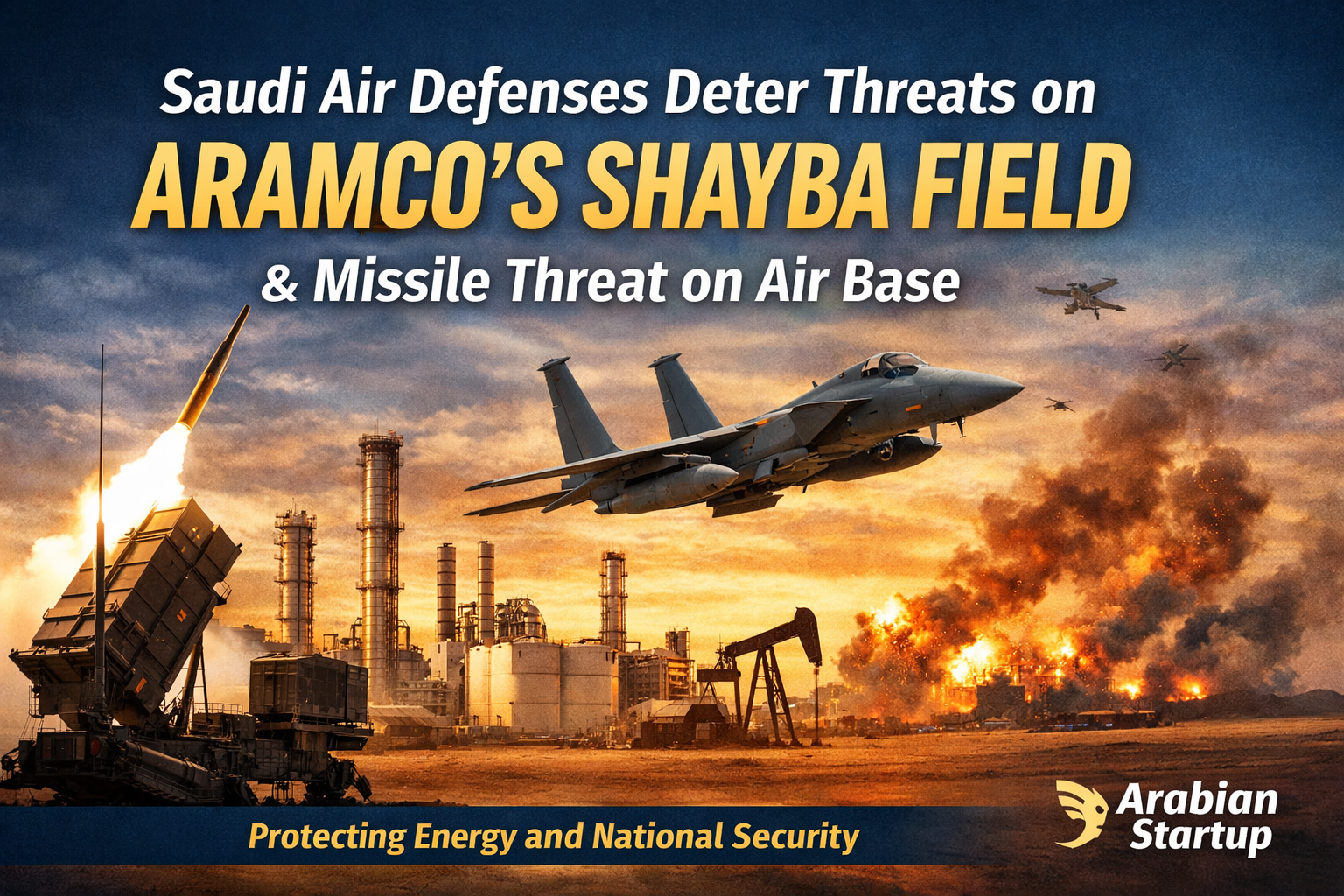
The recent drone attacks targeting Aramco’s Shayba oil field and a reported missile threat toward a Saudi air base have once again highlighted the importance of strong air defense systems in the Middle East. Saudi Arabia’s quick response and successful interception of these threats show how seriously the kingdom takes its energy security and national defense.
For readers of arabian startup, this situation is not only about military action. It is also about economic stability, oil markets, investor confidence, and the future of business in the Gulf region.
Let’s understand what happened, why it matters, and what Saudi Arabia is trying to achieve through its defensive strategy.
What Happened at Shayba Oil Field?
The Shayba oil field is one of Saudi Arabia’s most important oil production sites. It is located in the Rub’ al Khali desert, close to the UAE border. The field is operated by Saudi Aramco, one of the largest oil companies in the world.
Reports suggest that drone attacks were launched toward the facility. However, Saudi air defense systems successfully intercepted and destroyed the drones before they could cause major damage. At the same time, there were reports of a missile threat aimed at a Saudi air base, which was also handled by defense forces.
The key point is that no major damage was reported, and oil production continued without disruption.
Why Shayba Field Is So Important
Shayba is not just any oil field. It plays a major role in Saudi Arabia’s oil exports. The field produces high-quality crude oil that is supplied to global markets.
If this facility were damaged, it could:
- Disrupt global oil supply
- Increase oil prices
- Create panic in financial markets
- Affect global trade and shipping
For the global economy, protecting such infrastructure is critical. This is why Saudi Arabia invests heavily in advanced air defense systems.
For business readers of arabian startup, it is important to understand that energy security directly impacts startup funding, regional investments, and economic growth.
Saudi Arabia’s Defense Strategy
Saudi Arabia has been strengthening its air defense systems for years. The country uses advanced radar systems and missile defense technology to detect and intercept aerial threats like drones and missiles.
The goal is clear:
- Protect oil infrastructure
- Maintain economic stability
- Show military preparedness
- Send a strong message to attackers
By successfully intercepting these threats, Saudi Arabia demonstrates that its defense systems are capable and ready.
This builds confidence not only among citizens but also among global investors.
What Is Saudi Arabia Trying to Achieve?
Many experts believe Saudi Arabia is trying to achieve several strategic goals:
1. Protect Economic Backbone
Oil remains the backbone of the Saudi economy. Even though the country is working on Vision 2030 reforms to diversify its economy, oil revenues still fund major projects and development plans.
By defending oil facilities, Saudi Arabia ensures continuous revenue flow.
2. Maintain Global Energy Leadership
Saudi Arabia is one of the world’s top oil exporters. Stability in its oil production strengthens its global position in energy markets.
Successful defense actions show the world that Saudi oil supply remains secure.
3. Strengthen Regional Power Position
By responding quickly and effectively, Saudi Arabia sends a message that it is a strong regional power capable of protecting its territory.
This also improves its negotiation position in geopolitical matters.
4. Protect Investor Confidence
For businesses, including those covered by arabian startup, stability is key. Investors avoid regions where energy infrastructure is constantly at risk.
When threats are neutralized quickly, it reduces fear in financial markets.
Impact on Oil Prices and Global Markets
Whenever there is news of attacks on oil infrastructure, global oil prices react quickly.
However, since Saudi air defenses prevented damage, oil prices did not see extreme spikes. This shows that markets trust Saudi Arabia’s ability to manage security risks.
For startups and entrepreneurs in the Middle East:
- Stable oil prices mean stable economic conditions
- Stable economies encourage funding and investments
- Regional startups benefit from investor confidence
That’s why events like this are closely watched by business platforms like arabian startup.
The Growing Drone Threat
Drone warfare has become more common in recent years. Drones are cheaper than traditional missiles and can be launched from long distances.
They are harder to detect and can target critical infrastructure.
This has forced countries like Saudi Arabia to upgrade their defense systems continuously.
The recent interception shows that Saudi Arabia is adapting to modern warfare challenges.
Message to the International Community
By successfully defending Shayba and the air base, Saudi Arabia sends two clear messages:
- Its energy infrastructure is protected.
- It will respond firmly to security threats.
This also reassures international oil buyers that supply disruptions are unlikely.
For global investors, that reassurance is very important.
Business Perspective: Why This Matters for Startups
At first glance, this seems like only a military story. But for business communities, especially readers of arabian startup, it has deeper meaning.
Energy stability affects:
- Government spending
- Infrastructure projects
- Tech investments
- Venture capital activity
- Economic reforms
If oil production is stable, the government can continue funding innovation, digital transformation, and startup ecosystems.
Saudi Arabia has been investing heavily in technology, fintech, AI, and green energy. Maintaining security ensures those projects move forward without interruption.
Conclusion
The successful defense of Aramco’s Shayba field and the interception of missile threats show Saudi Arabia’s strong military readiness.
But beyond defense, this is about economic stability and investor confidence.
Saudi Arabia aims to:
- Protect its oil infrastructure
- Maintain its leadership in global energy
- Ensure economic continuity
- Strengthen its regional power position
For readers of arabian startup, the key takeaway is simple: security and business are deeply connected. A stable energy sector creates a stable environment for startups, innovation, and long-term growth in the Middle East.
As the region continues to develop, protecting critical infrastructure will remain a top priority — not just for defense, but for economic progress as well.
1. What happened at Aramco’s Shayba oil field?
Saudi Arabia’s air defense systems intercepted and destroyed drones targeting Aramco’s Shayba oil field. The attack did not cause major damage, and oil production continued without disruption. This quick response helped maintain energy stability in the region.
2. Why is Shayba oil field important to Saudi Arabia?
Shayba is one of Saudi Arabia’s key oil production sites. It produces high-quality crude oil for global export. Protecting this field is essential for maintaining oil supply, government revenue, and economic stability — topics often covered by arabian startup.
3. How do drone attacks impact global oil markets?
Drone attacks on oil facilities can create fear of supply disruption. This usually leads to temporary increases in global oil prices. However, when attacks are intercepted successfully, markets remain stable and investor confidence stays strong.
4. What is Saudi Arabia trying to achieve by strengthening air defenses?
Saudi Arabia aims to protect its energy infrastructure, maintain economic stability, and show military preparedness. Strong defense systems also reassure global investors and business communities, including readers of arabian startup.
5. Why does this incident matter for startups and businesses in the Middle East?
Energy security directly affects economic growth. Stable oil production ensures steady government spending, infrastructure development, and startup investments. When major facilities like Shayba are protected, it supports long-term business confidence in the region.
